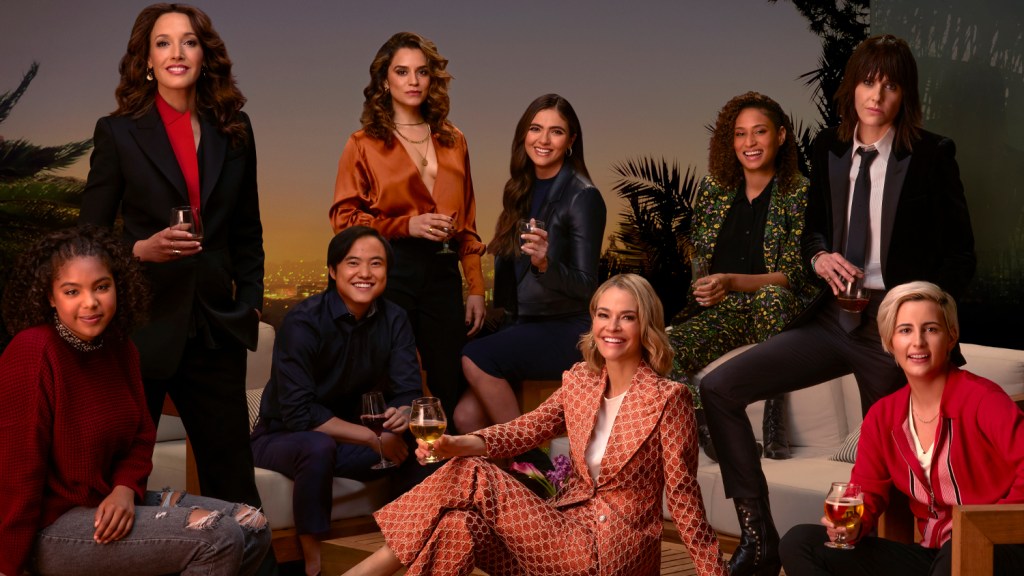

The L Word: Generation Q , which is a reboot of the popular early 2000’s Showtime drama, is a chance for the creative minds of that current show to atone for the mistakes of the original version. The first go-round of The L Word was groundbreaking for its depiction of lesbians on television. But it wasn’t without its faults. The original iteration of that show was criticized for its lack of representation of people of color, trans people and its judgmental attitudes towards all types of gender and sexual identities. This time they’re determined to get it right. Trans actors are given a point of view in their own storylines, a disabled character’s portrayer has a disability, and ethnic actors are actually played by actors who are that ethnicity.
Current showrunner Marja-Lewis Ryan recently gave an interview with the Hollywood Reporter addressing the return of fan favorite actor, Sarah Shahi, to revive her character’s doomed romance with perpetual ladies woman, Shane. Here is the part of that interview that spurred the writing of this piece:
I love Sarah Shahi. I loved Carmen on the original show. We are very interested in the ways in which casting has changed over time and it is challenging for us to imagine a world in which a Persian actress is playing a Mexican American. I’m not trying to crush anybody’s dreams; my dreams are crushed too. I’m with all of you, but we are moving ahead in terms of representation.

Her response stirred a lot of feelings within me. I loved Carmen and Shane’s doomed romance from the original and wasn’t a fan of Carmen’s abrupt departure on the show after being left at the altar by Shane. I wanted to see a resolution. But my feelings about Ryan’s response had zero to do with that. They had everything to do with a lingering question in my mind about who deserves to tell someone’s story.
The world is currently fighting against long established social injustices and archaic societal norms. There is now a concerted effort to be more inclusive and address the ways people and communities have been marginalized. From the creation of new terms to represent gender, sexual and racial identity to the hiring of underrepresented people in spaces where they have traditionally been sidelined. And like a partner who has disappointed you time and time again, America is trying to demonstrate just how much things have changed. When in fact, maybe they haven’t.
Nowhere is that more visible than on tv.
Television and media overall have responded to this call for inclusivity by incorporating more types of characters on screen. And while there is still a very long way to go in terms of representing all types of people onscreen, significant progress has been made. Offscreen, however, a debate is taking shape with no clear answer.
Once upon a time the question was: what does this art have to say? But now the question has become: who is making this art and do they have a right to say it? From actors to writers and producers, the issue of agency is moving to the forefront. As we work to dismantle systems of power and oppression that have existed, we are now scrutinizing the role the creators play in this effort.
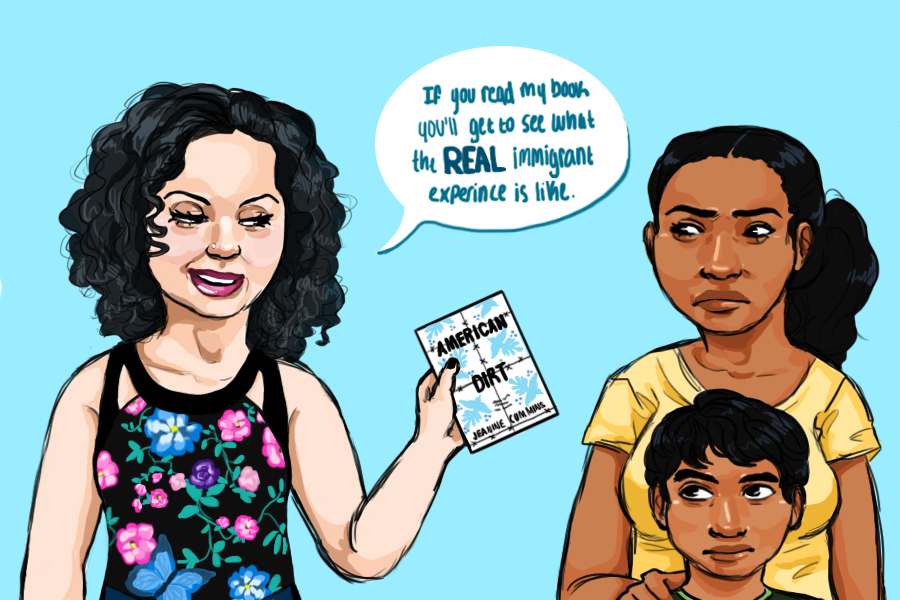
Though not tv related, “American Dirt” and the controversy surrounding the one-time Oprah Book Club selection, is the perfect summation of this debate. The book is about an undocumented Mexican immigrant mother. It is written by a white woman, who identified as white until only recently acknowledging her distant Puerto Rican ancestry. The author also claimed she had an intimate understanding of the undocumented experience because her husband was one (he’s Irish). The casual way the author used these identities to gain credibility are problematic. But I think she has the right to tell that story. Maybe someone connected to it should tell it first though.
And then there is whitewashing, where narratives specifically made for people of color are replaced by white people. Recently I came across an op-ed written by author Jenny Han, who wrote ‘To All The Boys I’ve Loved Before”, which became popular Netflix films. In it, she writes this:
Even before the book came out in 2014, there was interest in making a movie. But the interest died as soon as I made it clear the lead had to be Asian-American. One producer said to me, as long as the actress captures the spirit of the character, age and race don’t matter. I said, well, her spirit is Asian-American. That was the end of that.

A semi-autobigraphical romantic comedy written by an Asian woman about a teenager in high school, should be played by an Asian actress. That should be obvious.
But what about color blind casting and the idea that anyone of any race could play any part.
From blackface to cartoonish portrayals of Spanish speakers and Asians, Hollywood has often dropped the ball when having characters who are supposed to be a particular race or ethnicity, actually BE that race or ethnicity. So, I understand the desire to fix that.
The classic film West Side Story is a prime example of everything Hollywood did wrong in its not so distant past:
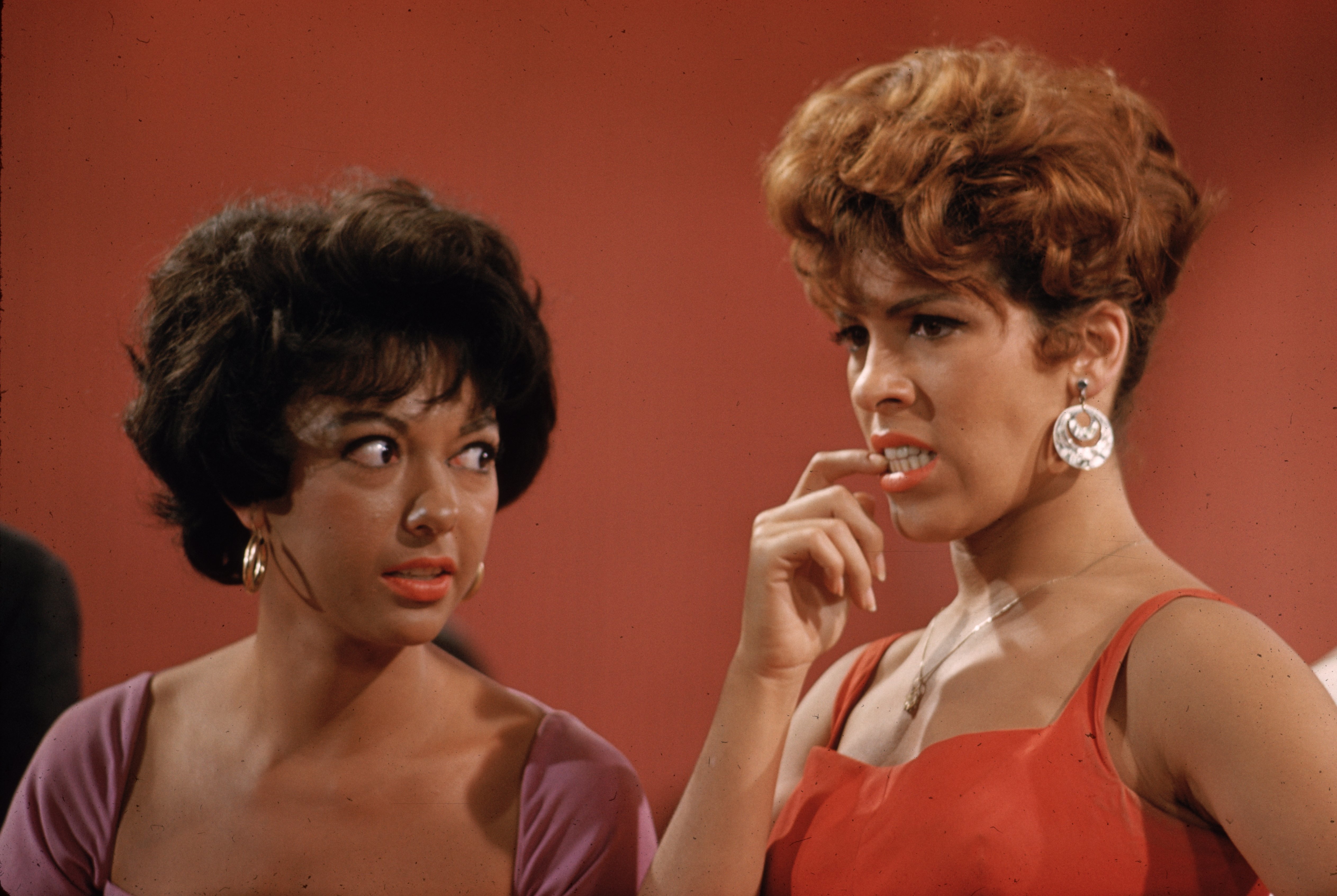
There is a lot that West Side Story does not get right. Consider this: One of the best things about West Side Story is the presence of Rita Moreno, who plays the tough but caring girlfriend of Bernardo, the leader of the Puerto Rican gang the Sharks. Moreno was a Puerto Rican woman who was playing a Puerto Rican woman, something that didn’t happen often in early-’60s Hollywood. And yet Rita Moreno had to wear brownface. All the white actors who played Puerto Ricans in West Side Story wore dark brown makeup, so Moreno had to wear dark brown makeup, too, so that she could match their skin tone. “It was like mud,” Moreno remembered, decades later. And when she tried to complain to the makeup artist, the makeup artist asked if she was racist.
Back to The L Word, the actress who plays Shane, Kate Moening, said in an interview that she was not out when she started playing her androgynous lesbian lothario character. She wasn’t sure who or what she was but she was tasked with playing someone who absolutely was sure of those things:
Was there a period of time between when you realized you were gay and when you came out to the world?
I was really just figuring myself out. And there was this fishbowl effect. There was a lot of conflation between myself and the character I played, and I was feeling pressure to acknowledge certain parts of myself, but if I didn’t have a clear understanding of who I was yet, then I wouldn’t have anything meaningful to say. And I think it’s important for people to come out, but it’s far more important to come out in your own time, because otherwise you’re doing it for someone else’s benefit and not your own, and then what is there to be said?
Her experience raises a whole host of new questions. Was she pushed out of the closet because of a desire from the audience for her to be her character? She wouldn’t be the first. This is often a recurring issue plaguing actors playing gay characters. But she’s not her character. No actor is. And they shouldn’t have to be. They’re not playing themselves.
By today’s standards, can an actor who isn’t gay play a gay character? Should they.
The question can then be asked of everything. Should male authors not write in a female voice. Should a white author never have black characters in their story.
There is a very fine line of balancing this desire for artistic freedom and respecting boundaries. That line should be understood but can it be crossed? Shouldn’t actors, writers and creators be allowed to tell any story they want even if they are not a part of its narrative?
The internet doesn’t think so. And people really seemed to hate Scarlett Johansson after comments like this, where she challenged these very issues:
“Acting goes through trends,” Johansson said in a recent interview with As If. “You know, as an actor I should be allowed to play any person, or any tree, or any animal because that is my job and the requirements of my job. There are a lot of social lines being drawn now, and a lot of political correctness is being reflected in art.”

It’s a complex issue. But I think there is a lot of nuance that people are not seeing in Johansson’s response. Of course, no one should play a race or ethnicity as a caricature and underrepresented artists should be allowed the opportunity to tell their own stories.
Entertainment needs more accurate and substantive representation. There is no doubt about that. I believe that this debate is a direct response to the lack of opportunities and visibility for underrepresented communities. And that is something that people in positions of privilege fail to recognize.
Artists are told that the only limitations are those of their own imaginations. But that doesn’t seem to be the case anymore. Call me idealistic but I envision a world where the scarcity of opportunity for underrepresented artists won’t exist and then everyone can be free to tell whatever stories they want. Isn’t that what art is?


 TV in Color
Leave a comment